Jam, Yellowstone’s Grizzly Bear
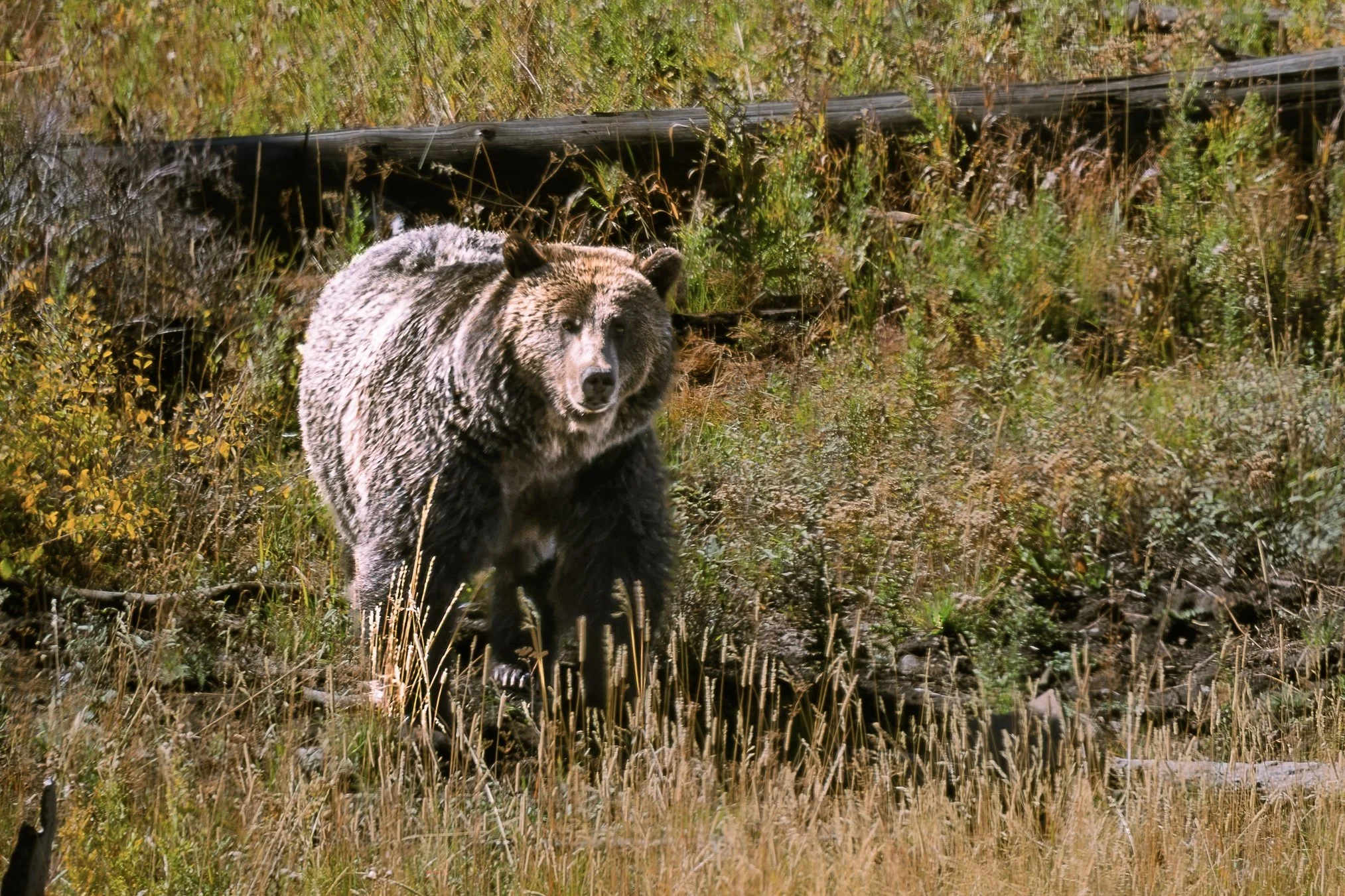
There is something humbling about watching a wild animal go about its life, seemingly unaware that a human observer is nearby. During my recent visit to Yellowstone National Park, I had the opportunity to spend some time observing a grizzly bear the locals have named Jam.
Jam has a sister named Snow, although I didn't have the pleasure of seeing her during this trip. Jam, however, was very much present and busy with the business of preparing for winter. In doing so, she reminded me of three things worth remembering: preparation, predictability, and patience.
Preparation: Knowing When It's Time
Autumn in Yellowstone is more than a change of colors. For wildlife, it is a signal that a difficult season is approaching.
Grizzly bears enter a period of intense feeding called hyperphagia, during which they consume enormous amounts of food to build the fat reserves they need to survive winter. Jam was certainly doing her part. She spent her time digging in the earth, searching for grubs, pine nuts, and roots.
Nature seems to have its own calendar, and Jam was following hers. She didn't need a forecast or a reminder. The changing seasons told her what she needed to know, and she was responding accordingly.
Watching her brought to mind the value of preparation. Some seasons of life demand that we look ahead, recognize what is coming, and make the necessary preparations before the weather turns against us. The time to prepare is not when the storm arrives, but while we still have the opportunity.
Jam was doing exactly that.
Predictability: Some Things Are Worth Returning To
A friend had given me grid coordinates for a location where he had watched Jam the previous year. Armed with that information, I returned to the same area a year later, hoping for a glimpse of her.
And there she was.
Jam was doing much the same thing my friend had observed the year before: digging for food and building the reserves she would need for winter. Her behavior seemed remarkably consistent, guided by the same seasonal rhythms that had brought her to this place before.
Of course, wild animals are never entirely predictable. Their lives depend on weather, food availability, and countless other variables. There are no guarantees when we venture into their world.
Still, there is something reassuring about recognizing a pattern in nature. The seasons return. Wildlife responds to familiar rhythms. Places that seemed ordinary on one visit may reveal a remarkable story when we return.
For a wildlife photographer, that knowledge is valuable. Research, local knowledge, and an understanding of animal behavior can make the difference between wandering aimlessly and being in the right place when an opportunity presents itself.
Sometimes, the best way to discover something new is to return to a place where someone has already discovered something wonderful.
Patience: The Art of Waiting
Perhaps the most important lesson Jam offered was patience.
One might expect a large predator like a grizzly bear to spend her time pursuing large prey such as elk. Yet here she was, patiently digging for tiny grubs, searching for pine nuts, and uncovering roots. These small rewards might not seem particularly impressive to us, but they were exactly what she needed.
Jam wasn't in a hurry. She worked methodically, moving from one promising spot to another, finding nourishment in things that would be easy for us to overlook.
She was also patient with me.
I was keeping a safe distance, camera in hand, watching her go about her business. She certainly knew I was there. A couple of times, she looked in my direction. But I wasn't interfering with her meal, and she returned to digging and eating.
There was no dramatic chase, no sudden encounter, and no spectacular display of power. Just a grizzly bear doing what grizzly bears do.
And that was enough.
Wildlife photography has taught me that the moments worth capturing often come to those willing to wait. We can research a location, study our subjects, check the weather, and arrive with the best equipment available. But none of those things can make a wild animal appear on our schedule.
Sometimes we wait for hours. Sometimes we leave without the photograph we hoped to make. And sometimes, if we are willing to slow down and pay attention, we discover something more meaningful than the image we originally had in mind.
Patience is a lesson I seem to need to learn again and again. Jam offered me another opportunity to practice.
A Wild Animal, Not a Teddy Bear
There is one more thing worth remembering about Jam.
A photograph can make a grizzly bear appear almost cuddly. Her thick fur, rounded ears, and seemingly peaceful expression can make us forget that we are looking at a powerful wild animal.
Looks can be deceiving.
Jam was calm, and I was comfortable observing her from a safe distance. But calm does not mean tame, and a bear that appears unconcerned can still be dangerous. Respecting that distinction is essential for our safety and hers.
Caution is not a lack of appreciation. It is part of appreciating wildlife responsibly. Giving an animal space allows it to remain wild and allows us to observe without needlessly disturbing its life.
The photograph preserves a moment. Good judgment helps ensure there will be more moments to appreciate.
Looking Beyond the Photograph
I traveled to Yellowstone hoping to photograph its landscapes and wildlife. I came away with images, of course, but also with reminders that extend beyond the camera.
Jam reminded me to prepare for the seasons ahead, to recognize the value of familiar patterns, and to be patient with the things that cannot be rushed.
Those lessons were there all along, playing out in the life of a grizzly bear preparing for winter. I simply needed to slow down long enough to notice them.
That is one of the joys of spending time in nature. We go looking for photographs, but if we pay attention, we may discover that the experience has something to teach us as well.
And sometimes, the best lesson of all is a simple one: be still, be patient, and keep looking.
And now, through my lens, I invite you to see more than the bear. See the life behind the image.