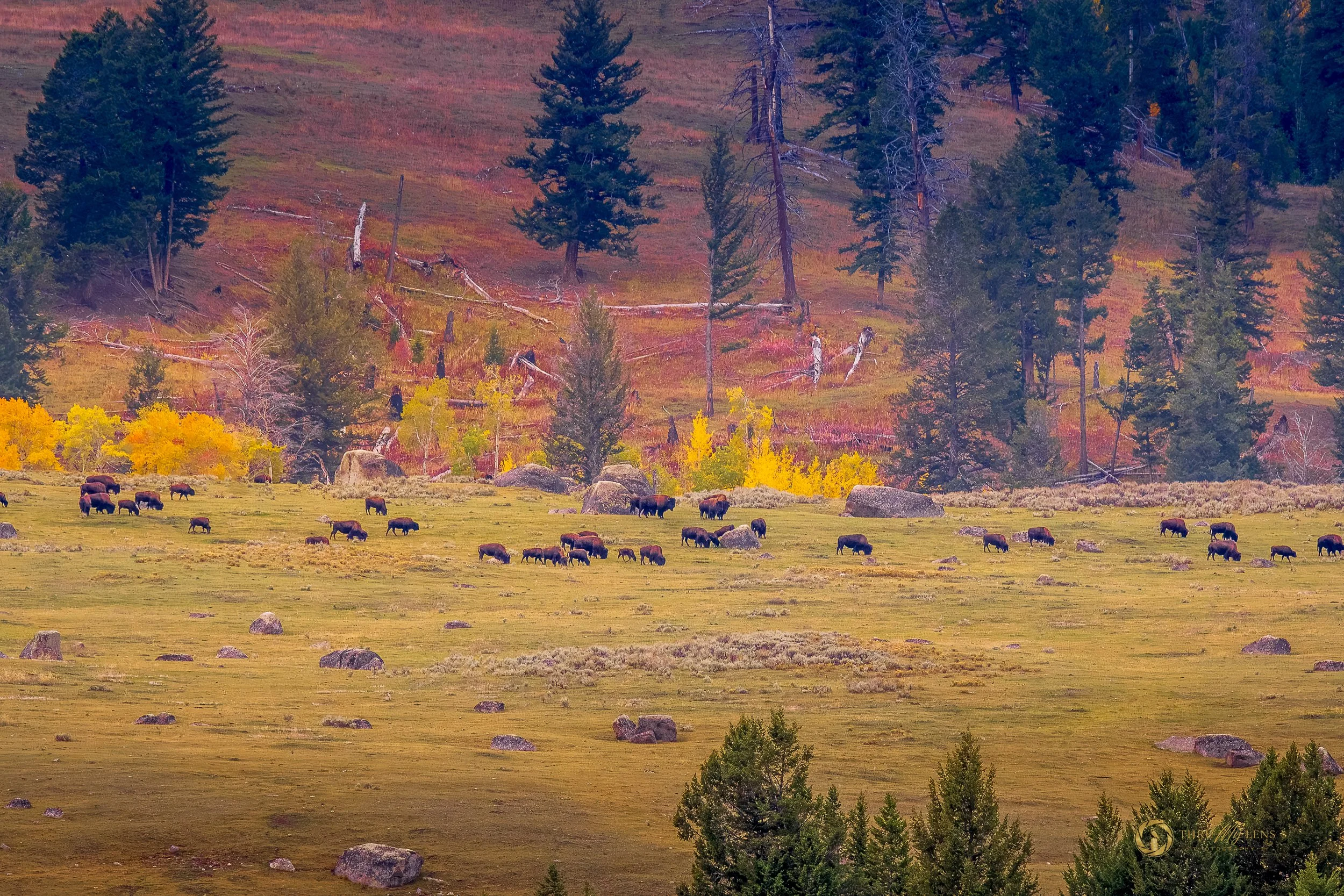
Bison herd stretches out across the valley floor in the early morning at Hayden Valley.
Yellowstone Photography Adventure — Episode 1 of 5
Every morning in Yellowstone began much the same way. I would leave my campsite and make my way toward the Northeast Entrance, knowing that beyond the gate lay another day of photographic possibilities. The road would carry me into Lamar Valley, a broad expanse of grassland framed by mountains, forests, and the quiet presence of the wild.
But no two mornings were quite the same.
As the first light approached, the eastern sky would begin its transformation. The deep blue of night gradually softened into purple, then pink, and finally shades of orange that hinted at the day to come. The valley remained largely in shadow, waiting patiently for its turn.
Then the mountain peaks would catch the sun.
At first, it was only a touch of light along the highest ridges, a subtle glow that slowly spread across the landscape. The mountains seemed to awaken before the world below them. Trees, rocky slopes, and autumn foliage gradually emerged from the shadows, revealing details that had been hidden only moments before.
Finally, the light reached the valley floor.
Golden grasses stretched across the broad meadow. Yellow aspens brightened the edges of the forest, and scattered boulders broke up the open landscape. Herds of bison moved slowly across the grass, seemingly unconcerned with the spectacle unfolding around them.
For all their size, bison can be surprisingly easy to take for granted when you see them day after day. They are such an unmistakable part of Yellowstone's character that it is tempting to think of them as simply another feature of the landscape. Yet there is something remarkable about watching these massive animals graze in the morning light, moving through a place where their ancestors have roamed for thousands of years.
Of course, bison weren't the only wildlife on my mind.
Near the Northeast Entrance, I spotted mountain goats high on the mountainsides. Against that rugged terrain, they seemed almost impossibly sure-footed, moving through a world of steep slopes and rocky ledges that would challenge most of us just to look at. Finding them required looking well beyond the familiar scenery of the valley floor.
Wolves were another matter. I did see them, but they remained so far away that they were little more than specks on the landscape, even through my longest zoom lens. There is a difference between seeing an animal and bringing home a photograph that conveys its presence. Sometimes the distance wins.
That is part of wildlife photography, too. The animals are not there to pose for us, and Yellowstone offers no guarantees. You can plan your day, choose your location, watch the light, and have the best equipment available. The wildlife makes its own decisions.
And sometimes, those decisions provide an unexpected gift.
One of my most enjoyable encounters came in Hayden Valley, where I found a small herd of pronghorn—often called American antelope, although they are a distinct North American species. I expected that any approach might send them running across the meadow. Instead, they seemed perfectly content to go about their day.
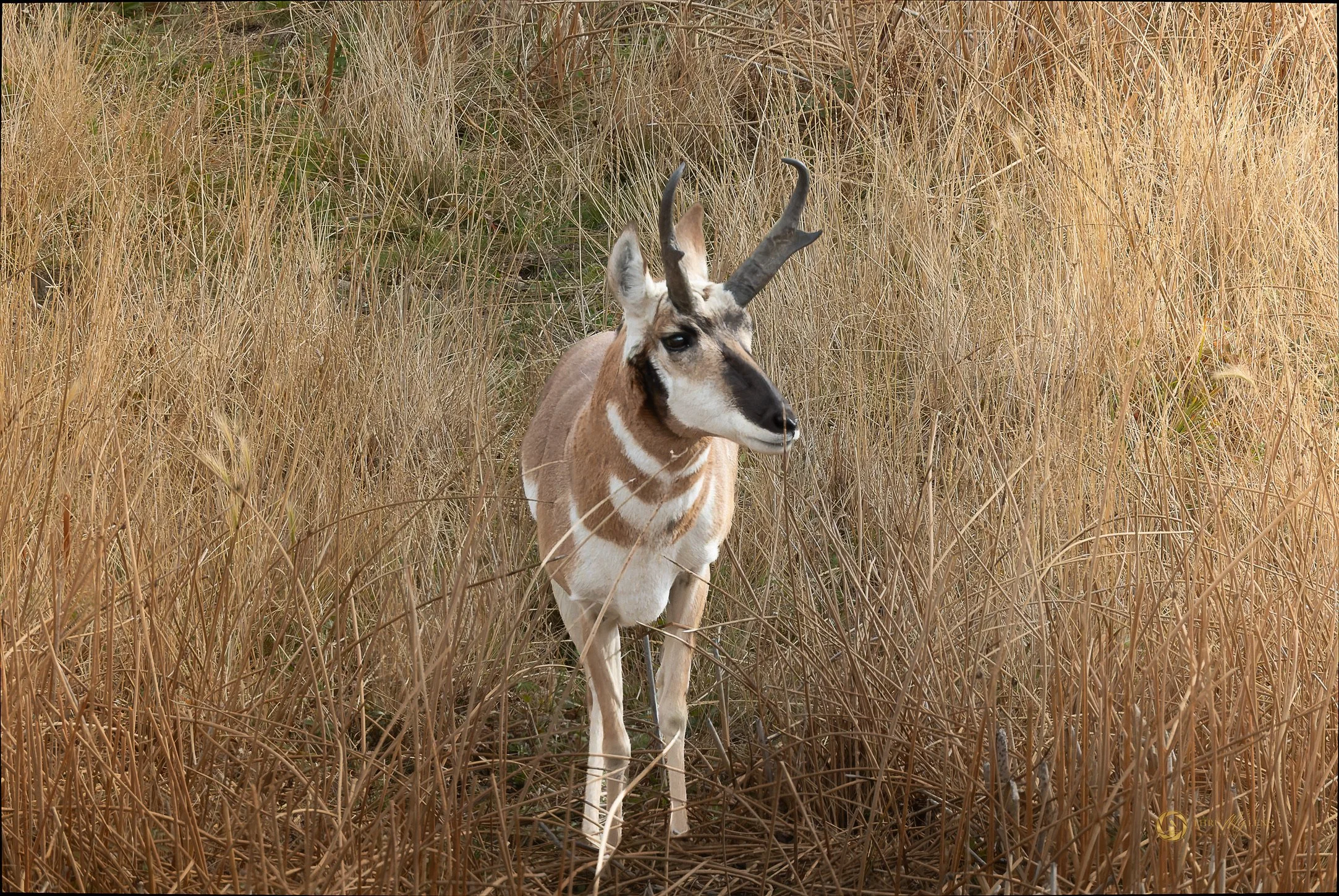
Buck keeps watch
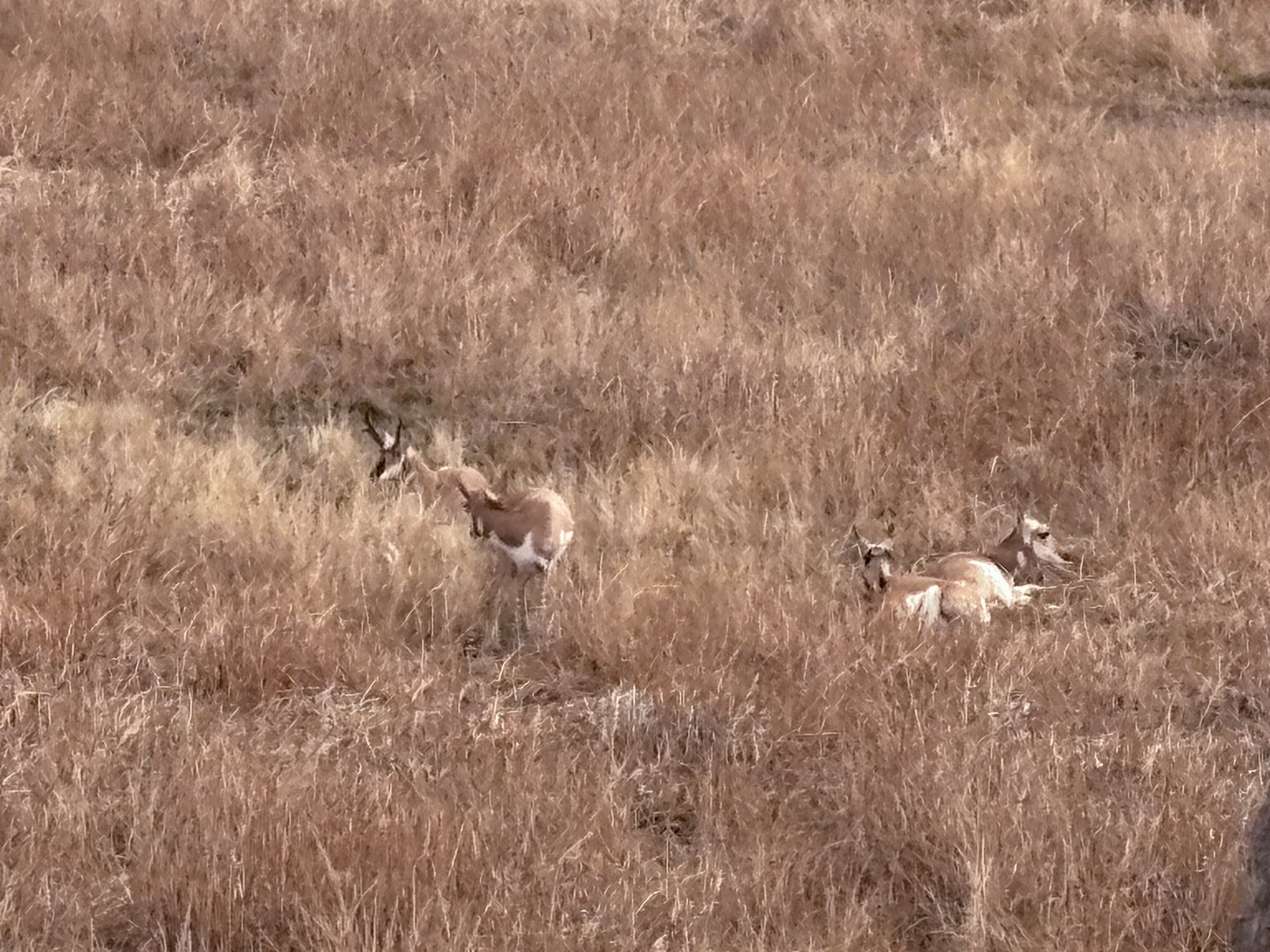
as family rests and plays
The adults grazed and rested in the grass while the young played nearby. There was no apparent alarm, no sudden rush to escape, just a little group of wild animals enjoying an ordinary day in their own home.
I watched them, appreciating the opportunity to witness something so natural and unhurried. We often think of wildlife encounters as dramatic moments: a predator on the hunt, a herd thundering across the plain, or an animal emerging unexpectedly from the forest. Those moments are exciting, but this was a different kind of experience.
There was something special about seeing these animals simply being themselves.
As a photographer, I spend considerable time looking for the unusual moment, the right light, or the composition that will turn a scene into a memorable image. Yet encounters like this remind me that the story isn't always in the dramatic action. Sometimes it is in the quiet details—in the way the young play, the adults rest, and life continues without any regard for the human observer standing nearby.
That was one of the gifts of my mornings in Yellowstone. Every day offered the possibility of discovery, but the discovery didn't always come in the form I expected.
Before I reached my day's destination, Lamar Valley had already given me a reason to stop, look, and appreciate the morning. The light had transformed the landscape, the bison had filled the meadow with their quiet presence, and somewhere along the way, other encounters had reminded me how much of the natural world remains beyond our control.
Another Yellowstone morning had begun.
And there was still a whole day of photography ahead.